
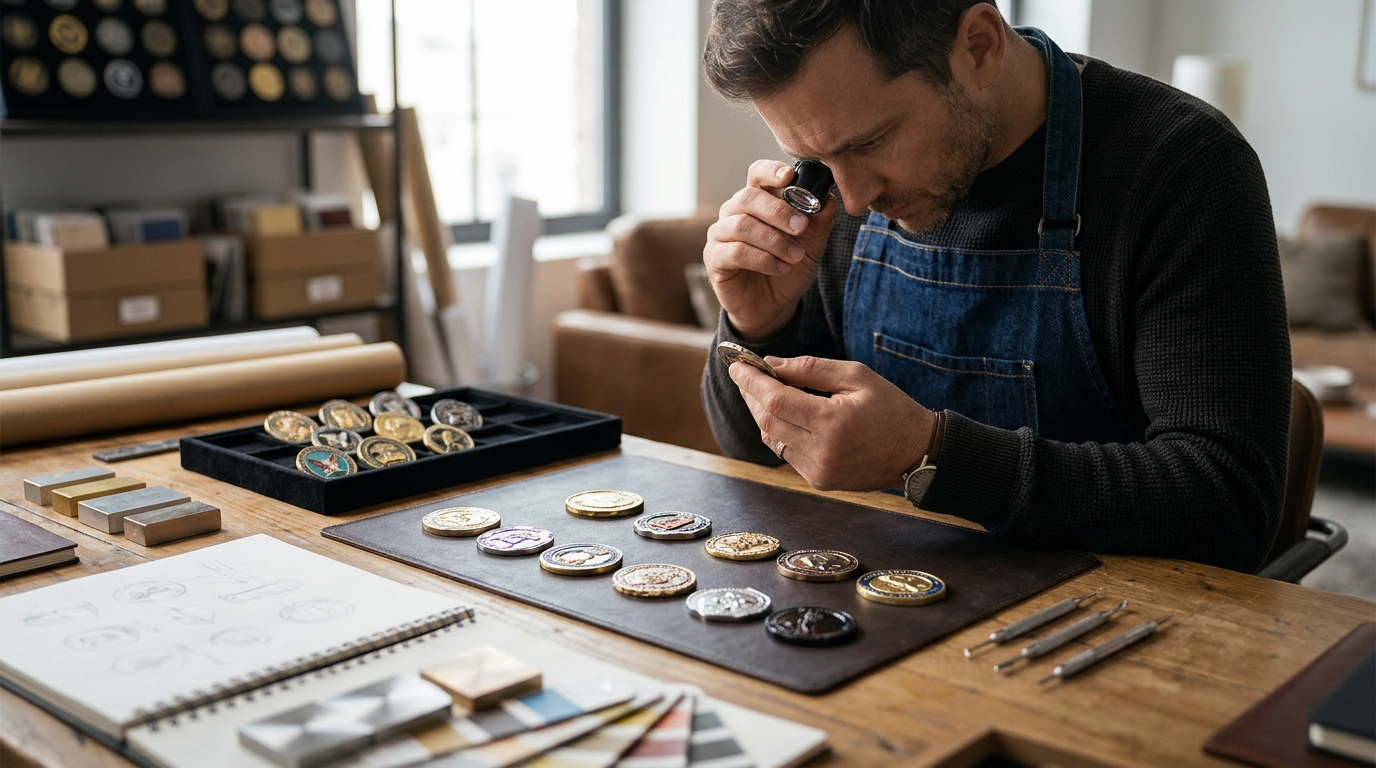
Challenge coin customization is the process of selecting specific physical attributes, such as metal, finish, and shape, to create a unique commemorative item. This guide details how different providers handle these variables. We cover enamel types, sculpting, shapes, plating, edges, design support, and order minimums to help you choose the right partner.
Soft and Hard Enamel Options
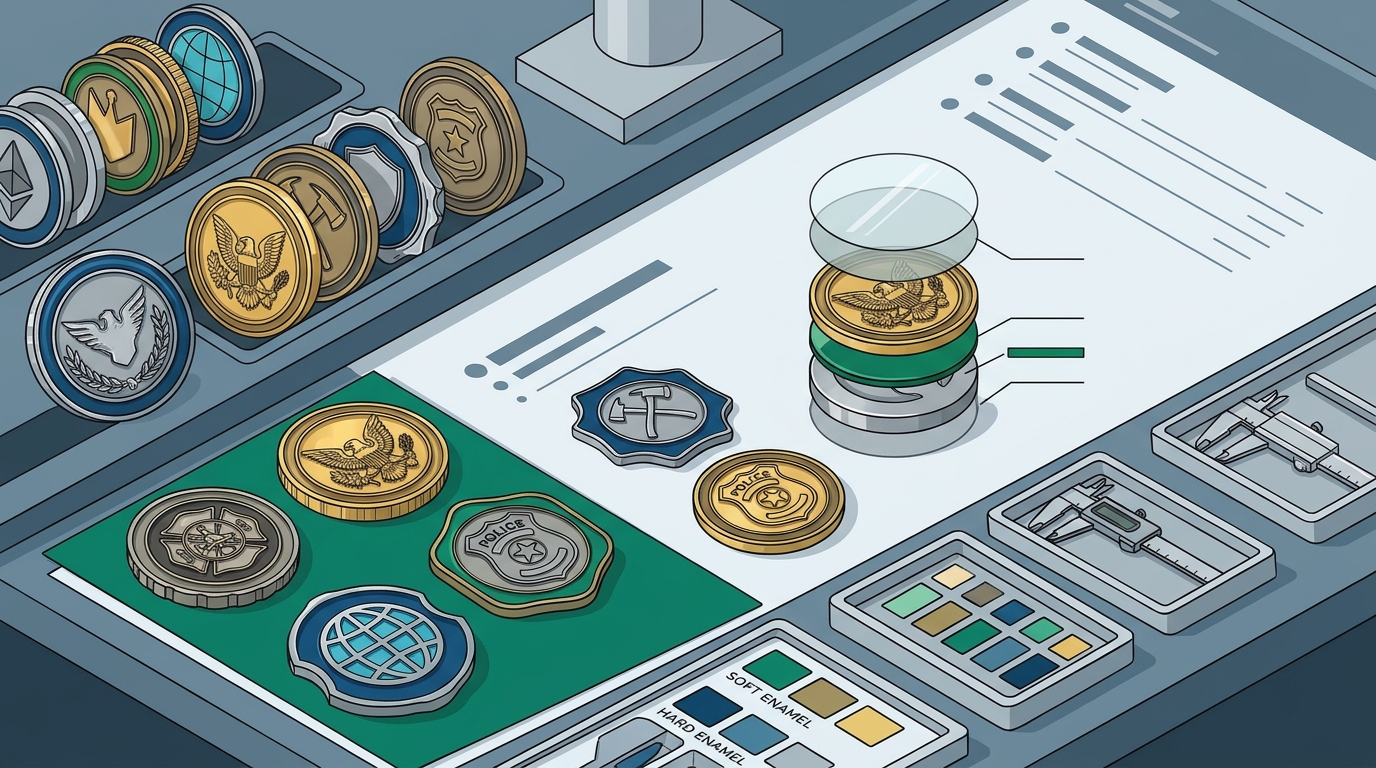
Enamel is the colored material applied to the recessed areas of a coin. The choice between soft and hard enamel significantly impacts the durability and visual depth of the final product. Soft enamel is a flexible, plastic-based material that sits slightly below the metal surface. It is cost-effective and allows for vibrant colors. Hard enamel is a glass-based material that is fired at high temperatures. It results in a smooth, glossy finish that is flush with the metal surface. Hard enamel is more durable and resistant to chipping than soft enamel.
Visual and Tactile Differences
Soft enamel creates a textured look where the metal lines are raised above the color. This gives the coin a tactile quality that some collectors prefer. Hard enamel provides a flat, polished appearance. The glass surface reflects light differently, often making the colors appear more saturated. For military and first responder units, hard enamel is often preferred for its professional, high-end look. However, soft enamel is suitable for promotional items where budget is a primary constraint.
Provider Capabilities
Not all mints offer both options. Some providers specialize in soft enamel for lower price points. Others, like Custom Challenge Coins, offer both to accommodate different budgets and aesthetic preferences. When comparing providers, verify if they can handle multi-color designs. Complex color separation is easier with soft enamel. Hard enamel requires precise die preparation to ensure the glass fills the recesses correctly without bubbling.
3D Sculpting and Relief
3D sculpting is the process of creating raised elements on the coin surface that have depth and rounded edges. This technique moves beyond flat, 2D designs to create realistic portraits and intricate details. Relief refers to the height of the raised metal. High relief creates dramatic shadows and highlights. Low relief is more subtle and easier to produce. 3D designs are often used for portraits of leaders, military equipment, or complex logos.
Realism and Detail
Standard 2D minting uses sharp, flat edges. 3D minting uses smooth, rounded transitions. This allows for a more lifelike representation of subjects. For example, a portrait of a general or a detailed vehicle looks far more realistic in 3D. The depth allows light to catch the curves, adding dimension. Providers with advanced CNC machining capabilities can produce these effects. Check if a provider offers 3D as a standard option or a premium add-on.
Production Complexity
3D designs require more time and skill to create. The dies must be machined with precision. This often results in a higher per-unit cost. However, the visual impact is significant. If your design includes a face or a complex machine, 3D sculpting is the best choice. It elevates the coin from a simple token to a collectible piece of art.
Custom Shapes and Cut-Outs
Custom shapes are non-circular outlines that define the outer boundary of the coin. This allows the coin to mimic the shape of a logo, a vehicle, or a specific symbol. Cut-outs are internal voids within the coin design. These can create negative space for text or images. Combining custom shapes with cut-outs allows for highly unique designs. For instance, a coin shaped like a helicopter with a cut-out rotor blade is a powerful visual statement.
Structural Integrity
While creative, custom shapes must maintain structural integrity. Thin points or sharp angles can break during the minting process. Experienced mints will advise on design adjustments to ensure durability. A provider like Custom Challenge Coins specializes in these complex geometries. They can determine if a specific shape is feasible. They also offer cut-out designs that add visual interest without compromising strength.
Design Flexibility
Round coins are the standard, but they are not the only option. Custom shapes make a coin stand out in a collection. They are particularly effective for corporate branding or unique unit insignias. The key is to work with a provider who has experience with non-standard shapes. They will know the limitations of the metal and the die-making process.
Metal Plating and Finishes
Metal plating is the application of a thin layer of metal to the surface of the coin. This determines the color and luster of the coin. Common plating options include gold, silver, copper, bronze, and black nickel. The base metal is usually brass or zinc alloy. The plating provides the aesthetic finish. Antique finishes are also popular. These involve a chemical process that darkens the recessed areas, creating a vintage look.
Popular Finish Types
Polish finishes are bright and reflective. They are the most common for modern designs. Antique finishes are matte and textured. They are often used for historical or traditional designs. Black nickel is a dark, durable finish that provides high contrast for gold or silver elements. The choice of finish should align with the overall theme of the coin. A military unit might prefer a bronze antique finish. A corporate client might prefer a bright gold polish.
Durability and Maintenance
Some finishes are more durable than others. Gold plating can wear off over time if rubbed frequently. Black nickel is generally more resistant to wear. The base metal also matters. Brass is a common base because it is easy to plate. Zinc alloy is another option. When comparing providers, ask about the thickness of the plating. Thicker plating lasts longer. Custom Challenge Coins offers a range of plating options to suit different needs.
Edge Treatments
Edge treatments are the designs applied to the rim of the coin. The edge is often overlooked, but it adds a professional touch. Common edge treatments include flat, rope, spur, and oblique. A flat edge is smooth and plain. A rope edge has a twisted, cord-like pattern. A spur edge has small, raised bumps. An oblique edge has diagonal lines. These treatments can be applied to one or both sides of the coin.
Functional and Aesthetic Roles
Edge treatments serve both aesthetic and functional purposes. They add texture and visual interest. They can also include text, such as a unit motto or a date. The choice of edge treatment should complement the face design. A busy face design might benefit from a simple flat edge. A simple face design might benefit from a detailed rope edge. Providers offer various edge options at different price points. Some edges are free, while others cost extra per coin.
Custom Edge Text
Many providers allow custom text on the edge. This is a great place to put a message that does not fit on the face. It adds a personal touch. The text is usually engraved into the die. It is then raised on the coin. This is a subtle but effective way to add detail. Check if the provider offers this service and what the character limits are.
Design Assistance and Support
Design assistance is the service provided by a mint to help customers create their coin designs. This can range from simple file conversion to full artistic creation. Many customers do not have professional design skills. They may have a rough sketch or a logo file that needs adjustment. A good provider offers free design services. They work with you to refine the concept. They ensure the design is suitable for minting.
Process and Communication
Technical Expertise
Designers at a mint understand the technical constraints of coin production. They know what details can be captured in metal. They can advise on color separation and relief. This expertise is valuable. It prevents costly mistakes. A provider with experienced designers will save you time and money. They will guide you through the options and help you make informed decisions.
Minimum Order Quantities
Minimum order quantities (MOQs) are the smallest number of coins a provider will produce. This is a critical factor in cost and feasibility. Most mints have a minimum order of 50 or 100 coins. This is because the die-making process has a fixed cost. The die fee is spread across the number of coins. Ordering more coins reduces the per-unit cost. Some providers allow single coin orders, but at a much higher price.
Cost Implications
Flexibility and Split Shipping
| Feature | Soft Enamel | Hard Enamel | 3D Sculpting |
|---|---|---|---|
| Finish | Matte, textured | Glossy, smooth | Varies by design |
| Durability | Good | Excellent | Good |
| Cost | Lower | Higher | Premium |
| Best For | Promotional items | Collectibles, awards | Portraits, complex logos |
Key Takeaways
- Soft enamel is cost-effective and textured, while hard enamel is glossy and durable.
- 3D sculpting adds realism and depth, ideal for portraits and complex designs.
- Custom shapes and cut-outs allow for unique, non-circular coin designs.
- Metal plating options include gold, silver, bronze, and black nickel, each with different aesthetics.
- Edge treatments add professional detail and can include custom text.
- Design assistance is crucial for customers without professional design skills.
- Minimum order quantities affect the per-unit cost and die fee structure.
- Choose a provider that offers the specific combination of features you need.
Frequently Asked Questions
What is the difference between soft and hard enamel?
Soft enamel is a flexible, plastic-based material that sits below the metal surface. Hard enamel is a glass-based material that is fired to a smooth, glossy finish flush with the metal.
Can I get a coin in a custom shape?
Yes, many providers offer custom shapes. The shape can mimic a logo or symbol. Structural integrity must be considered to prevent breakage.
What is 3D sculpting?
3D sculpting is a minting technique that creates raised elements with rounded edges. It adds depth and realism to the design.
How much does a die fee cost?
Die fees vary by provider and size. They are often waived for larger orders. Check the specific pricing structure of the provider.
Do providers offer design help?
Most reputable providers offer free design assistance. They help refine your concept and create a digital proof for approval.
What is the minimum order quantity?
Minimum order quantities typically start at 50 or 100 coins. This allows the die fee to be spread across the order.
Can I ship to a military address?
Yes, many providers ship to APO, FPO, and DPO addresses. Delivery may take a few extra days due to postal processing.
Conclusion
Choosing the right customization options for your challenge coins requires careful consideration of each variable. From enamel type to edge treatment, every decision impacts the final look and cost. Custom Challenge Coins offers a comprehensive range of options to suit any need. Their team provides expert guidance throughout the process. To start your project, request a quote today.