
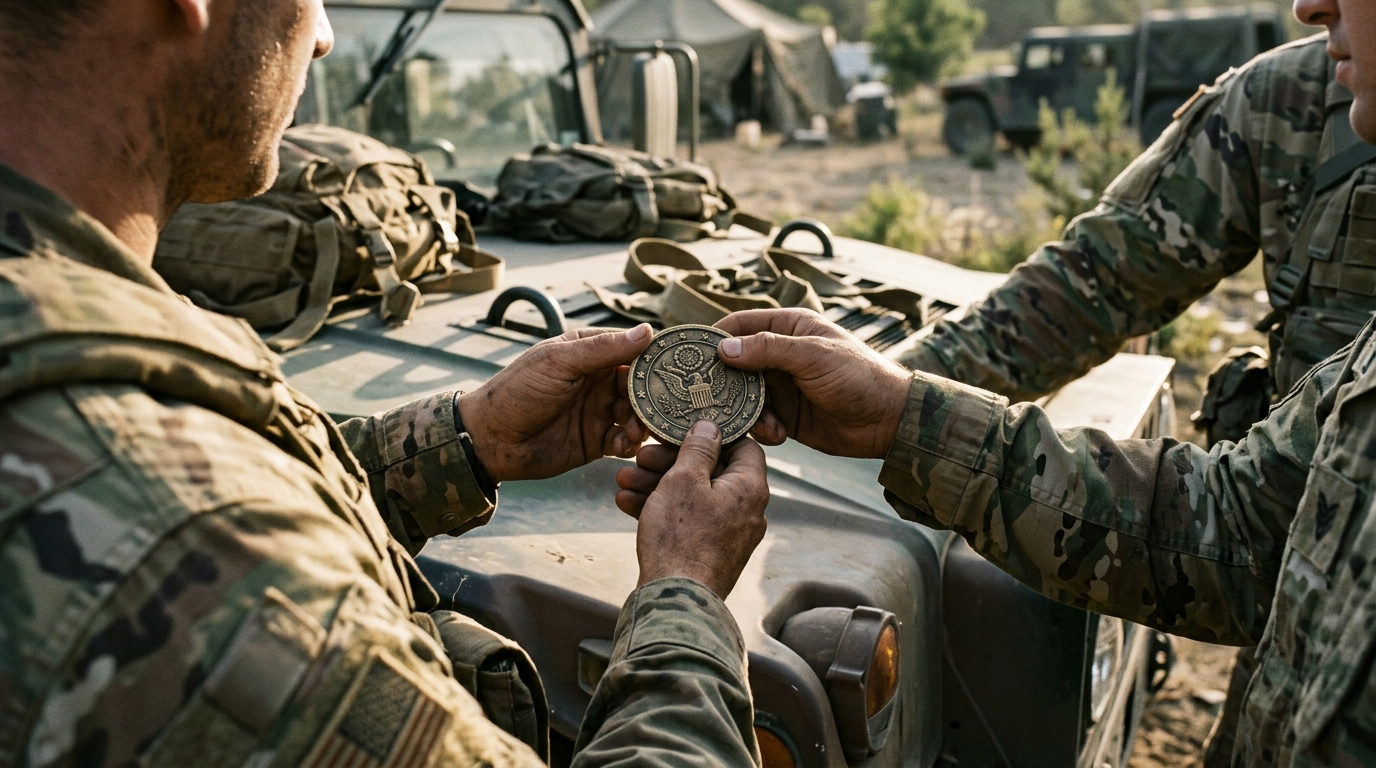
Military units require challenge coins that withstand rigorous field conditions, daily carry, and long-term storage. Die struck coins offer superior durability compared to cast alternatives because the metal is compressed under high pressure rather than poured into a mold. This process creates a denser, harder metal structure that resists wear and tear. Custom Challenge Coins provides these robust options for units seeking reliable, long-lasting recognition items.
1. Solid Brass Die Struck Coins
Solid brass is the gold standard for durability due to its high density and resistance to corrosion. Brass is a copper and zinc alloy that is naturally resistant to rust and tarnish when properly plated. The die striking process compresses the brass into a very hard, uniform piece of metal. This makes it ideal for coins that will be carried in pockets, holsters, or on keychains daily.
2. Solid Copper Die Struck Coins
Copper offers exceptional malleability during striking, resulting in a very dense and durable final product. While copper can oxidize over time, the die struck process creates a tight metal structure that holds up well under physical stress. Units often choose copper for its warm aesthetic and robust feel. It is a heavy, substantial coin that conveys weight and importance.
3. Solid Nickel Die Struck Coins
Nickel is a hard, silver-toned metal that is highly resistant to scratching and wear. This makes it an excellent choice for coins that will see heavy use in the field. Nickel does not rust, which is a significant advantage for outdoor military applications. The die struck nickel coin is a tough, no-nonsense option for daily carry.
4. Hard Enamel Die Struck Coins
Hard enamel is fired at high temperatures, creating a glass-like surface that is extremely durable and scratch-resistant. Unlike soft enamel, hard enamel is flush with the metal surface, eliminating low spots where dirt can accumulate or where the color can chip. This finish is ideal for coins that need to look pristine for years. The glass surface is difficult to scratch, maintaining the coin's visual integrity.
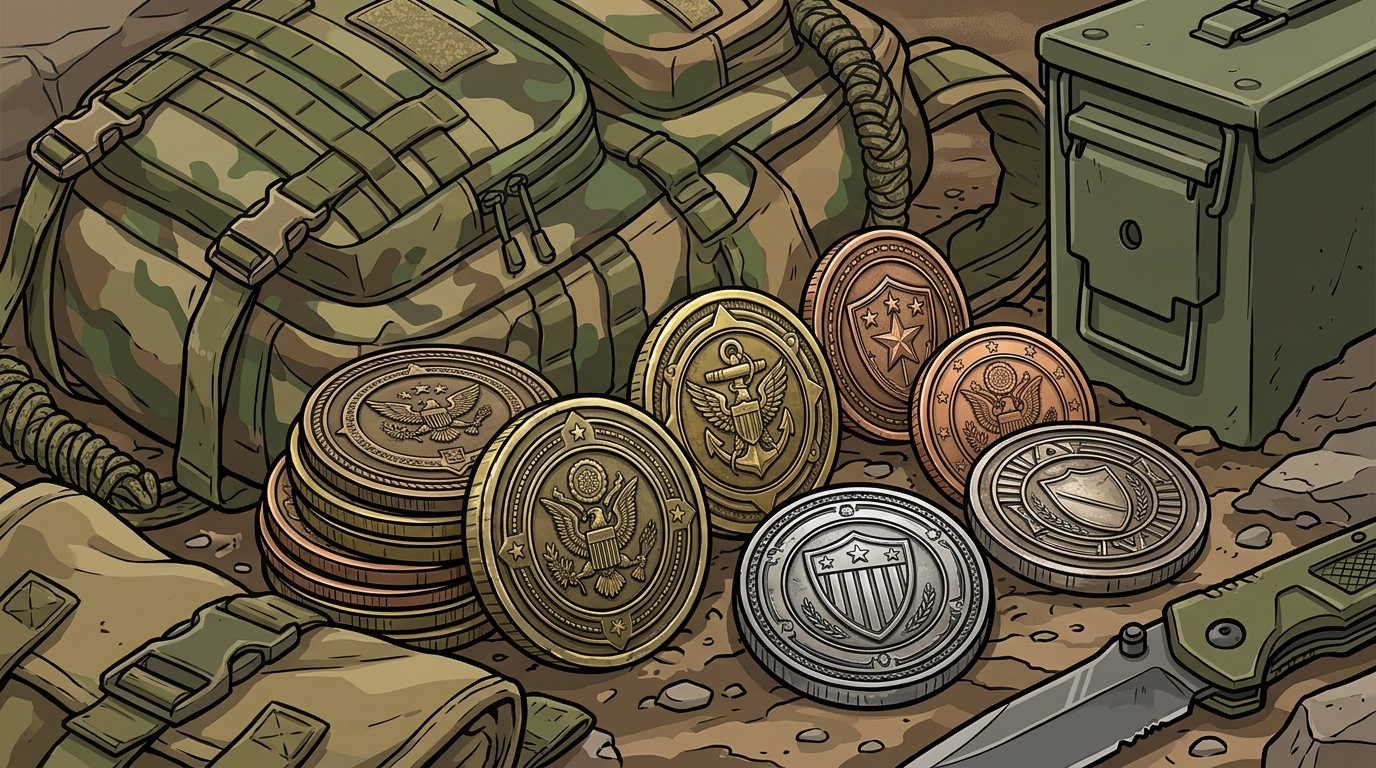
5. 3D Die Struck Coins
3D die struck coins feature raised, rounded edges that add structural depth and durability. This technique allows for more realistic portraits and detailed imagery. The 3D process uses a different striking method that creates a smoother, more robust edge profile. This adds to the overall strength of the coin, making it less prone to bending or denting.
6. Custom Shape Die Struck Coins
Custom shapes can be engineered for structural integrity, allowing for unique yet durable designs. While round coins are standard, custom shapes like shields or stars can be die struck with reinforced edges. This ensures that the unique shape does not compromise the coin's durability. Custom Challenge Coins can help design shapes that maintain structural strength while offering individuality.
7. Numbered Die Struck Coins
Numbering adds a layer of permanence and collectibility, encouraging careful handling and long-term retention. When a coin is numbered, it becomes a unique artifact for the recipient. This psychological factor often leads to better care and preservation of the coin. It is a durable option in the sense that it is likely to be kept and cherished for a lifetime.
Choosing the Right Option
Select the metal and finish that best matches your unit's environment and budget. For maximum physical durability in the field, solid nickel or brass with hard enamel is the top choice. For a balance of cost and durability, solid brass with soft enamel is a reliable option. Consider the long-term use case when making your decision.
Frequently Asked Questions
Is die struck more durable than cast?
Yes, die struck coins are generally more durable because the metal is compressed under high pressure, creating a denser and harder structure. Cast coins are poured into a mold, which can result in a less dense metal structure that is more prone to wear.
What is the most durable metal for challenge coins?
Nickel and brass are considered the most durable metals for challenge coins. Nickel is very hard and scratch-resistant, while brass is dense and resistant to corrosion. Both metals hold up well under daily use.
Does hard enamel chip easily?
Hard enamel is fired at high temperatures to create a glass-like surface that is very resistant to chipping and scratching. It is significantly more durable than soft enamel, which sits in recessed areas and is more prone to wear.
Can die struck coins be customized in shape?
Yes, die struck coins can be customized in various shapes, including shields, stars, and other unique forms. The die striking process allows for precise and durable custom shapes that maintain structural integrity.
How long do die struck coins last?
Die struck coins can last a lifetime if cared for properly. The dense metal structure and durable finishes like hard enamel ensure that the coin remains in excellent condition for decades.
Get Your Durable Coins
Ready to order durable die struck challenge coins for your unit? Visit Custom Challenge Coins to start your design process today. Learn more: Contact Custom Challenge Coins.