
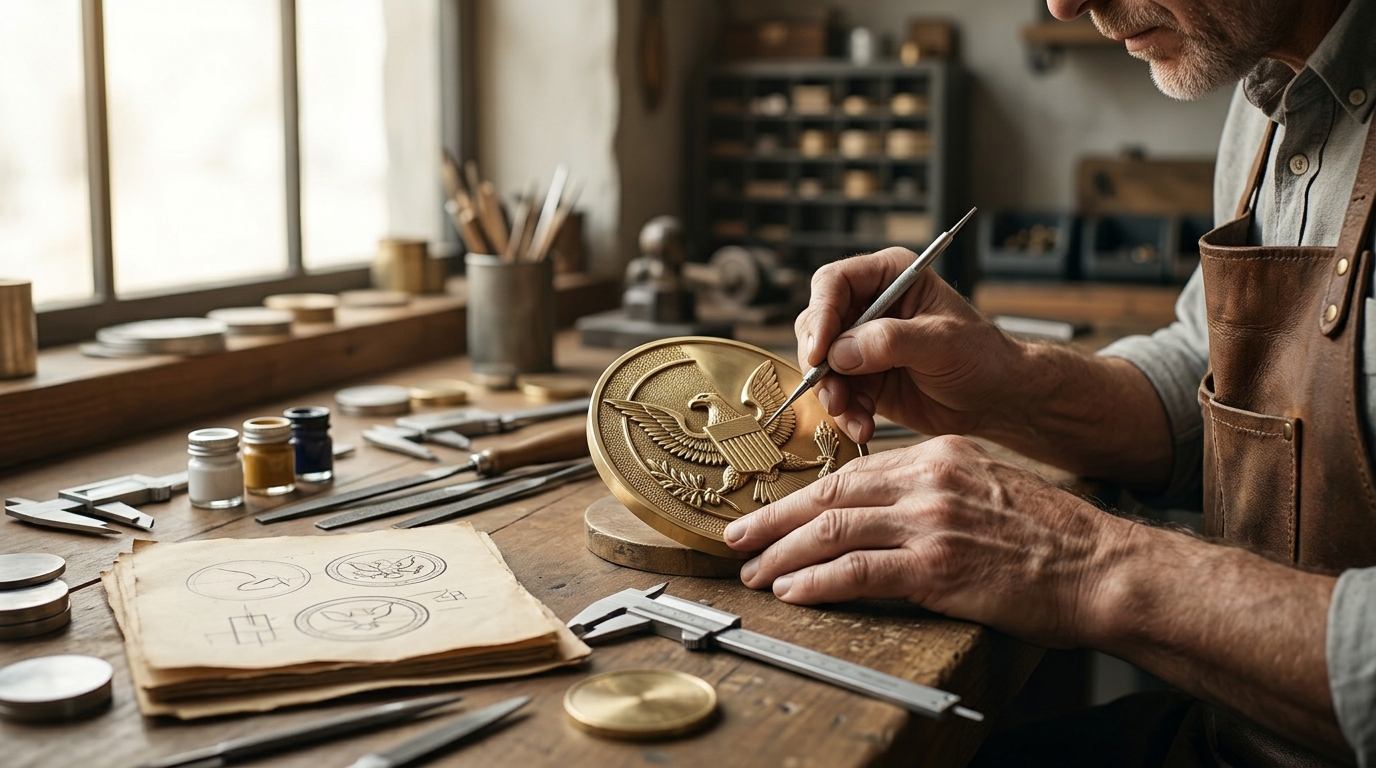
Custom challenge coin design is the process of creating a personalized metal token that reflects a specific group's identity, mission, or brand. This guide details the unique features you can include, from custom shapes and 3D sculpting to specialty finishes and functional elements. We will explore how these technical options transform a standard coin into a high-value collectible or promotional asset.
Custom Shapes
While most coins are round, the outer perimeter of a coin is a powerful design element. A custom shape is a non-circular outline that defines the physical boundary of the coin. This feature allows designers to incorporate the silhouette of a logo, a vehicle, or a symbolic object directly into the coin's structure. For example, a law enforcement agency might choose a shield shape, while a racing team might opt for the outline of a car. The shape sets the first impression and can make a coin instantly recognizable on a keychain or display case. For additional details, review the Contact Custom Challenge Coins.
Cut-Out Designs
Custom shapes extend beyond the outer edge to include interior cut-outs. A cut-out design is a technique where specific areas within the coin are removed, creating negative space. This allows for complex logos to be reproduced accurately. For instance, a company logo with intricate internal lines can be minted with those lines as physical voids in the metal. This adds depth and visual interest that a flat, solid coin cannot achieve. It is a critical tool for translating 2D vector art into a 3D physical object. For additional details, review the We Make Custom Challenge.
Complexity and Feasibility
Not all shapes are equally feasible. Simple geometric shapes like hexagons or ovals are standard. However, highly complex organic shapes require careful engineering to ensure the coin remains structurally sound. At Custom Challenge Coins, our design team evaluates the structural integrity of custom shapes to ensure the final product is durable. We can usually find a solution that balances aesthetic complexity with manufacturing reliability.
3D Sculpting
3D sculpting is the process of creating raised or recessed elements with rounded, smooth edges rather than sharp, flat planes. This technique mimics the relief found in modern US currency. It adds a sense of realism and depth to portraits, machinery, and landscapes. When light hits a 3D sculpted coin, it creates dynamic shadows that change as the coin is tilted. This makes the design feel alive and tactile.
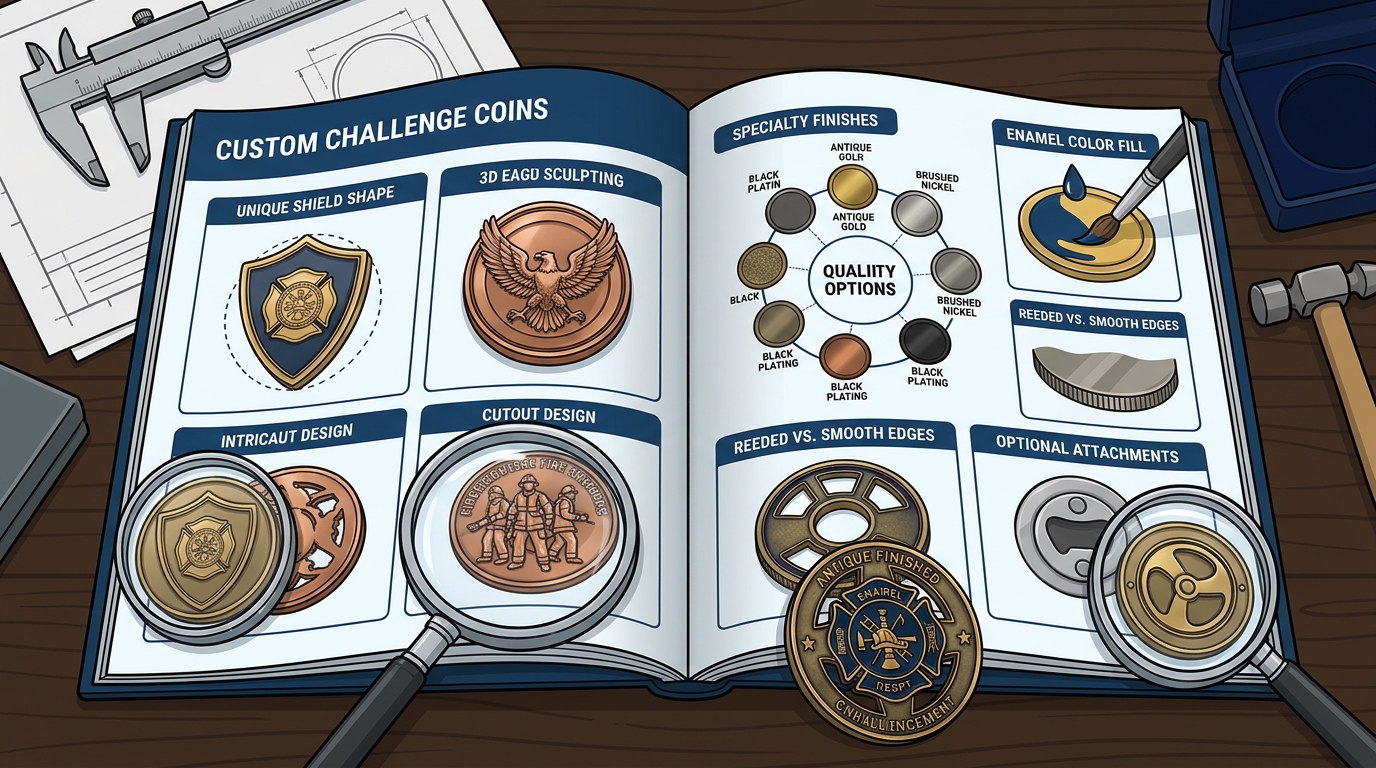
Realism in Portraits and Machinery
3D sculpting is particularly effective for portraits and military hardware. A flat 2D image of a soldier or a tank lacks dimension. By sculpting these elements in 3D, the coin captures the texture of uniforms, the curvature of armor, and the facial features of individuals. This level of detail is what separates a standard promotional item from a premium collectible. It invites the holder to touch and examine the coin, enhancing its perceived value.
Combining 3D with Custom Shapes
The most striking coins often combine 3D sculpting with custom shapes. For example, a coin shaped like a lacrosse stick can feature 3D sculpted webbing and team names. This combination creates a multi-layered visual experience. The shape defines the object, while the 3D details provide the texture and depth. This approach is ideal for groups that want a coin that is both a functional item and a piece of art.
Edge Styles
The edge of a coin is often overlooked, but it is a significant design surface. Edge styles are the patterns or textures applied to the vertical rim of the coin. A standard flat edge is simple, but textured edges add a layer of craftsmanship and detail. The edge is visible when the coin is held upright or viewed from the side, making it a prime location for additional branding or decorative elements.
Textured and Patterned Edges
Common edge styles include rope, spur, and oblique patterns. A rope edge mimics the look of twisted rope, adding a nautical or traditional feel. A spur edge features small, raised dots or lines, providing a subtle texture. An oblique edge is cut at an angle, creating a beveled look that catches the light. These patterns can be applied to one or both sides of the coin. They add a tactile element that enhances the coin's premium feel.
Engraved Edges
Some coins feature engraved text or logos on the edge. This is useful for adding a motto, a unit name, or a date without cluttering the main face of the coin. The edge provides a discreet space for information that is important but does not need to be the focal point. This feature is particularly popular for commemorative coins and awards.
Color Options
Color options are the application of enamel or paint to specific areas of the coin. This feature allows for full-color reproduction of logos, flags, and artwork. Without color, a coin is limited to the metallic tones of the base metal. With color, the design potential is virtually unlimited. Color adds vibrancy and brand recognition, making the coin a powerful promotional tool.
Hard Enamel vs. Soft Enamel
There are two primary types of enamel. Hard enamel is a glass-like finish that is fired at high temperatures. It is durable, smooth, and flush with the metal surface. Soft enamel is a plastic-like finish that sits slightly below the metal surface. It is less durable but allows for more intricate color details. The choice between hard and soft enamel depends on the desired look and the complexity of the design. Hard enamel is ideal for logos with large color fields, while soft enamel is better for detailed illustrations.
Color Matching and Branding
Accurate color matching is critical for brand consistency. Our design team works to match the specific Pantone or RGB colors of your logo. This ensures that the coin aligns with your existing brand materials. Color can also be used strategically to highlight specific elements of the design, drawing the eye to key features. Whether you need a single accent color or a full-color image, color options transform a coin into a vibrant piece of media.
Functional Features
Functional features are elements that give the coin a purpose beyond display. A functional feature is a component that allows the coin to be used as a tool or accessory. These features increase the utility of the coin, making it a daily carry item rather than a shelf ornament. They enhance the coin's value by providing practical benefits to the holder.
Keychains and Attachments
Specialty Attachments
Sequential Numbering
Sequential numbering is the process of assigning a unique number to each coin in a series. This feature is often used for limited edition coins or membership tokens. A sequential number is a distinct identifier that distinguishes one coin from another. It adds a sense of exclusivity and collectibility. For example, a coin might be numbered "1 of 100" or "12 of 500." This feature is highly valued by collectors and members who want to track their specific item.
Membership and Awards
Implementation and Visibility
The number can be placed on the edge, the back, or a specific area of the front. It is usually engraved or stamped into the metal. The font and size of the number should be legible but not overpowering. The placement should be consistent across all coins in the series. This feature requires careful planning to ensure that the numbering system is clear and easy to understand.
Specialty Finishes
Specialty finishes are surface treatments that alter the appearance and texture of the metal. A specialty finish is a coating or treatment applied to the coin to achieve a specific look. These finishes go beyond standard polishing and can dramatically change the coin's aesthetic. They add depth, contrast, and a premium feel to the design.
Antique and Black Finishes
Antique finishes involve applying a dark patina to the recessed areas of the coin. This creates a high-contrast look where the raised elements are bright and the recessed areas are dark. Black finishes involve coating the entire coin or specific areas with a black oxide or paint. These finishes are popular for military and tactical designs. They give the coin a rugged, modern look. The contrast between the metal and the finish highlights the details of the design.
Multi-Tone and Plating
Multi-tone finishes involve using different metal colors on different parts of the coin. For example, a coin might have a gold face and a silver edge. This creates a striking visual contrast. Plating options include gold, silver, copper, bronze, and nickel. The choice of plating affects the coin's durability and appearance. Some finishes are more resistant to tarnishing than others. The right finish can enhance the longevity and beauty of the coin.
Comparison of Design Features
| Custom Shapes | Non-circular outlines and cut-outs | Logos, symbols, unique silhouettes |
| 3D Sculpting | Raised elements with rounded edges | Portraits, machinery, realism |
| Edge Styles | Textured or engraved rims | Additional branding, decorative detail |
| Color Options | Hard or soft enamel application | Full-color logos, flags, artwork |
| Sequential Numbering | Unique identifiers for each coin | Limited editions, memberships |
| Specialty Finishes | Antique, black, multi-tone plating | High contrast, premium look |
Key Takeaways
- Custom shapes and cut-outs allow for the reproduction of complex logos and symbols.
- 3D sculpting adds realism and depth to portraits and machinery.
- Edge styles provide an additional surface for branding and decorative patterns.
- Color options, such as hard and soft enamel, enable full-color design reproduction.
- Functional features like keychains increase the utility and daily visibility of the coin.
- Sequential numbering adds exclusivity and collectibility to limited edition coins.
- Specialty finishes, including antique and black, enhance contrast and premium feel.
Frequently Asked Questions
Can I use a complex logo as a custom shape?
Yes, complex logos can be used as custom shapes. We use cut-out techniques to reproduce intricate internal details. The design team will evaluate the structural integrity to ensure the coin is durable.
What is the difference between hard and soft enamel?
Hard enamel is a glass-like finish that is flush with the metal and highly durable. Soft enamel is a plastic-like finish that sits below the metal surface and allows for more intricate details.
Can I add text to the edge of the coin?
Yes, you can engrave text, logos, or patterns on the edge. This is a discreet way to add information without cluttering the main face of the coin.
Is sequential numbering available for all coin sizes?
Sequential numbering is available for most coin sizes. The placement of the number depends on the size and design of the coin. We will work with you to find the best location.
How do I choose the right specialty finish?
Can I combine 3D sculpting with color?
Yes, 3D sculpting and color can be combined. The color can be applied to the recessed areas or the raised elements. This creates a vibrant, multi-dimensional design.
What is the best functional feature for a promotional coin?
A keychain attachment is the most common functional feature for promotional coins. It ensures the coin is carried daily, providing continuous brand exposure.