
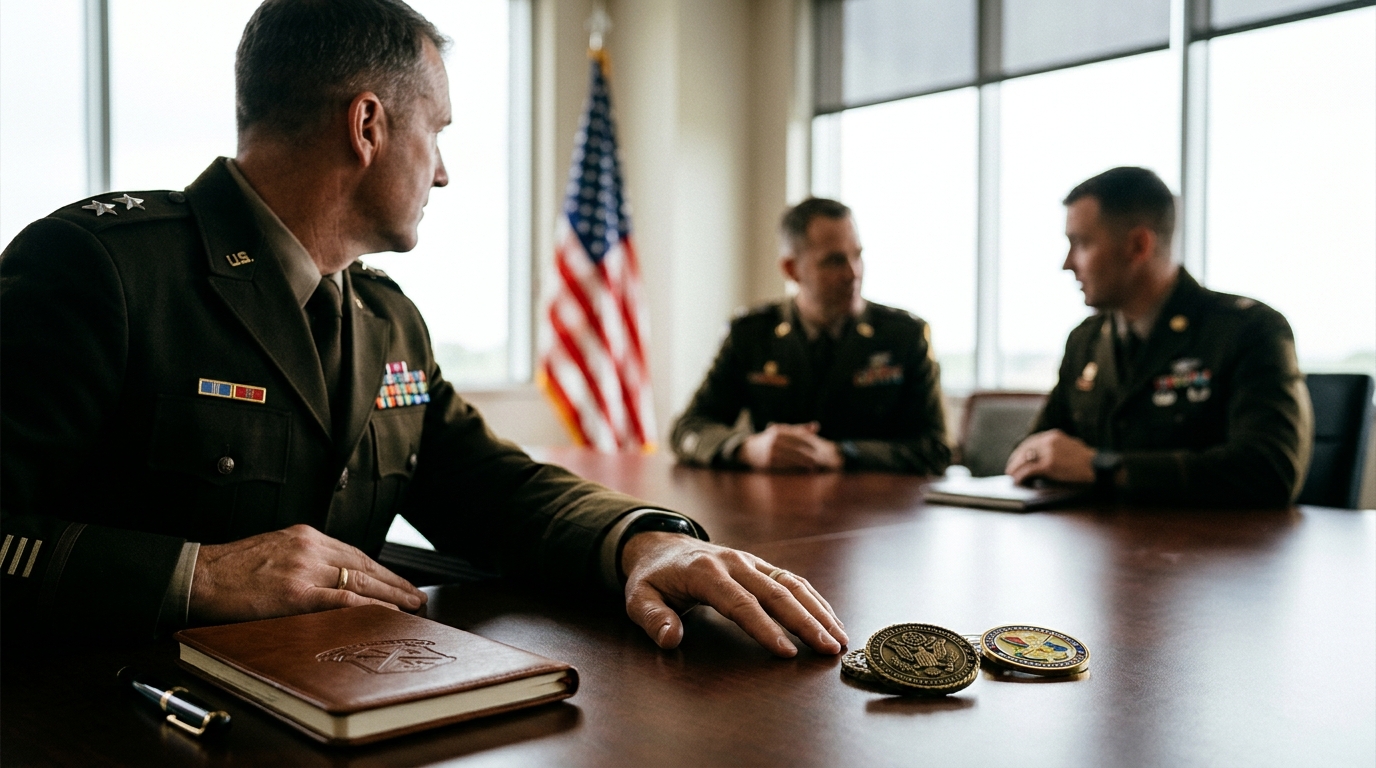
For most military units, die-struck coins offer superior durability and a classic, authoritative aesthetic, while cast coins with enamel provide vibrant color and complex 3D detail. The best choice depends on whether your unit prioritizes long-term wear resistance or visual impact. This guide breaks down the technical differences, costs, and design implications to help you select the right metal for your mission. For additional details, review the Custom Challenge Coins.
How to Choose: Separating Quality from Cost
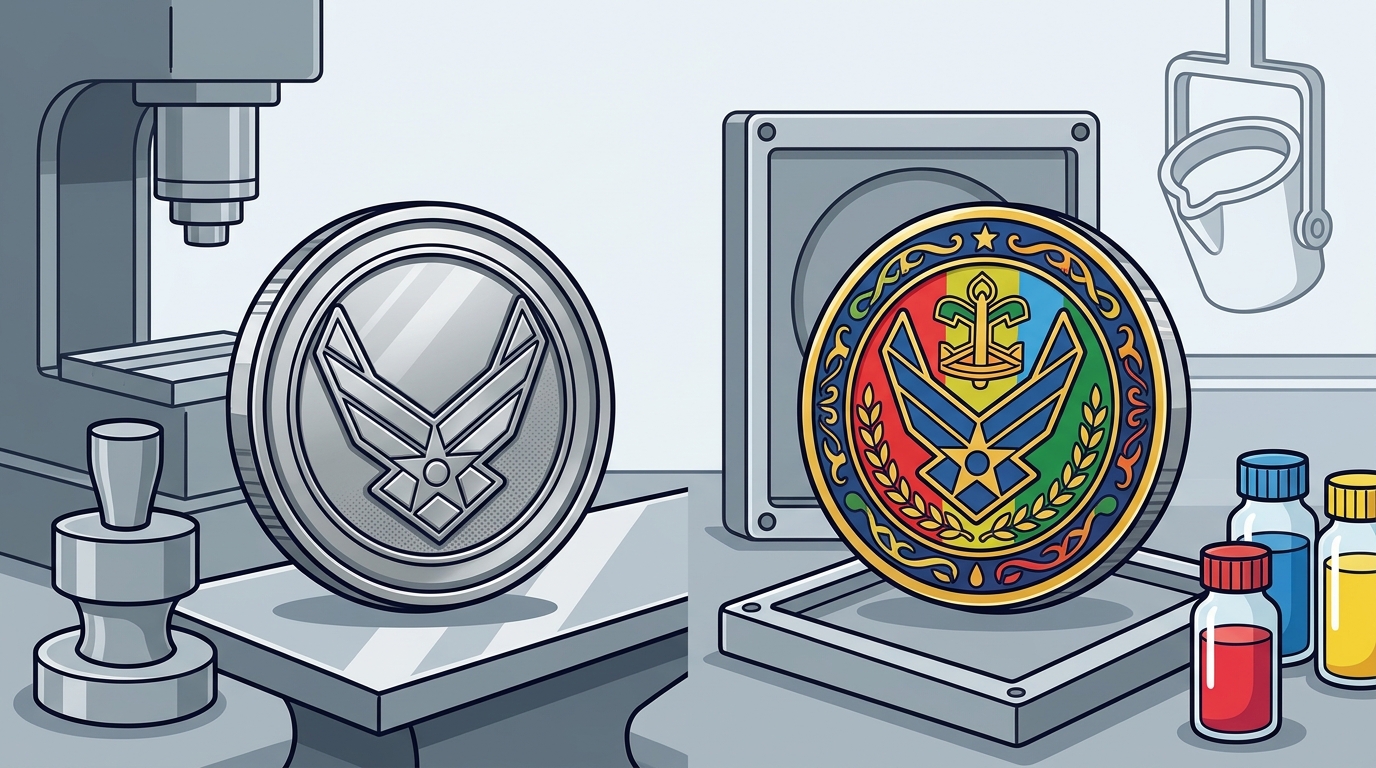
Choosing between die-struck and cast coins is not just about aesthetics; it is about the physical properties of the metal. Die-struck coins are created by pressing a metal blank between two hardened steel dies under immense pressure. This process compresses the metal, making it denser and harder. Cast coins are made by pouring molten metal into a mold. This allows for thicker, more detailed relief but results in a softer metal that is more prone to scratching.
Durability vs. Detail
Die-struck coins excel in fine line work because the pressure forces the metal into the die's grooves. However, they are limited in the depth of the relief. Cast coins can achieve higher relief, meaning the design pops out more from the surface. This is ideal for portraits or complex machinery where depth is required. You must weigh the need for depth against the need for longevity.
Finish Options
Die-struck coins usually come in polished, antique, or matte finishes. These finishes are integral to the metal surface. Cast coins rely on enamel for color. If you want a coin that looks like a traditional currency piece, choose die-struck. If you want a coin that looks like a piece of jewelry or a colorful badge, choose cast with enamel.
What to Ask Before Committing
Before you finalize a design, you need to ask your vendor specific technical questions. Vague answers often lead to disappointment. You should ask about the metal composition, the type of enamel, and the edge treatment.
First, ask about the metal alloy. Is it brass, nickel, or a custom blend? The alloy affects the color and the weight. Second, ask about the enamel type. Is it soft enamel, hard enamel, or no enamel? Soft enamel is recessed and textured. Hard enamel is polished flat and glass-like. Third, ask about the edge. A flat edge is standard, but rope or spur edges add detail. These questions help you understand the final product before you pay.
Design Compatibility
Not every design works well with every method. Ask if your logo has fine details that might get lost in a die-struck process. Ask if your color palette requires more than three colors, as this can increase the cost of cast coins significantly. A good vendor will tell you if a design is not suitable for a specific method.
How to Verify Claims and Credentials
The custom coin industry has many vendors, but quality varies. You need to verify that the vendor is legitimate and capable. Check for a physical address and a verifiable phone number. Look for customer testimonials from other military or first responder units. These are the most relevant references for your needs. according to Concept Analysis Challenge
Verify the vendor's experience with your specific type of coin. If you want a die-struck coin, ask for examples of their die-struck work. If you want cast enamel, ask for examples of their enamel work. Do not rely on stock photos. Ask for photos of actual customer coins. This ensures you are seeing the real quality of their production.
Checking for Red Flags
Be wary of vendors who do not provide a digital proof before production. A legitimate vendor will always send a digital mockup for your approval. If they rush you to pay without showing a proof, walk away. Also, check their return policy. Custom items are often non-refundable, but a good vendor will offer to remake defective items.
How the Process Works
Understanding the production process helps you manage expectations. The process generally follows a specific order: design, proofing, production, and shipping. Each step has a specific timeline and purpose.
First, you submit your design files or a description. The vendor's design team creates a digital proof. You review this proof for accuracy. Once you approve the proof, the vendor creates the dies or molds. This is the most time-consuming step. After the dies or molds are ready, the coins are produced. Finally, the coins are inspected, packaged, and shipped.
Die-Struck Process
For die-struck coins, the vendor creates two steel dies, one for the obverse and one for the reverse. These dies are engraved and hardened. The metal blanks are then pressed between these dies. This process is fast once the dies are made, but creating the dies takes time.
Cast Enamel Process
For cast coins, the vendor creates a mold from your design. Molten metal is poured into the mold. Once the metal cools, the coin is removed. The enamel is then applied to the recessed areas. The coin is then fired in a kiln to cure the enamel. This process is more labor-intensive and takes longer than die-struck production.
What It Costs
Cost is a major factor in your decision. Generally, die-struck coins are less expensive than cast coins with enamel. The cost is driven by the quantity, the size, and the complexity of the design.
Die-struck coins have a lower per-unit cost because the process is automated. The main cost is the die fee, which is a one-time charge. Cast coins have a higher per-unit cost because the enamel application is manual. The more colors you use, the higher the cost. You should get a quote for both methods to compare the total investment.
Quantity Discounts
Common Mistakes and How to Avoid Them
Many units make mistakes that lead to a coin they do not like. The most common mistake is not reviewing the digital proof carefully. Spelling errors and design flaws are hard to fix once production starts. Always check the proof multiple times.
Another mistake is choosing the wrong finish. If you choose a polished finish for a coin that will be carried daily, it will scratch. Choose an antique or matte finish for durability. Finally, do not underestimate the time. Production takes time. Order early to avoid missing your event. according to Concept Analysis Challenge
Design Errors
Ensure your design files are high resolution. Low-resolution images will result in blurry coins. Use vector files (like AI or EPS) if possible. This ensures the design scales perfectly to the coin size.
Versus Alternatives
While die-struck and cast are the main options, there are other alternatives. You might consider stamped coins, which are cheaper but less durable. You might also consider 3D printed coins, which are not metal and are not suitable for long-term use. For a military unit, metal coins are the standard. They convey weight and permanence.
Die-struck coins are the best alternative to traditional currency. They look like money but are custom. Cast coins are the best alternative to badges. They are colorful and detailed. Choose the method that aligns with your unit's identity.
For a Specific Situation
The best choice depends on your specific situation. If you are a unit that deploys frequently, choose die-struck. The coins will survive the rigors of deployment. If you are a unit that hosts a large public event, choose cast with enamel. The colors will attract attention and make for a great souvenir.
If you are a small unit with a limited budget, choose die-struck. You can get a high-quality coin for less money. If you are a large unit with a generous budget, you can afford cast with enamel. The extra cost is worth the visual impact.
Rules and Protections
There are rules and protections that apply to custom coins. You must ensure you have the rights to use any logos or images in your design. You are responsible for obtaining permission from the copyright holder. The vendor is not responsible for intellectual property infringement.
Check the vendor's terms of sale. Understand their policy on returns and exchanges. Most custom items are non-refundable, but the vendor should replace defective items. Read the fine print before you order.
Local Specifics and Sourcing
Sourcing can affect the quality and the timeline. Some vendors manufacture their coins in the USA, while others use overseas factories. US-based manufacturing often results in faster shipping and better quality control. Overseas manufacturing can be cheaper but may take longer.
Consider the location of the vendor. If you are in the USA, a US-based vendor is usually the best choice. They understand the local market and can ship quickly. If you are outside the USA, check the vendor's international shipping policies.
Timing and Production Windows
Timing is critical. Production takes time, and you need to account for it. Die-struck coins typically take 10 to 14 business days. Cast coins with enamel can take 3 to 4 weeks. You should order at least 6 weeks before your event to be safe.
Do not wait until the last minute. If you order late, you may not get the coins in time for your event. Plan ahead and order early. This gives you time to review the proof and make any necessary changes.
Results Over Time
The results over time depend on the method you choose. Die-struck coins will last for decades. They will develop a patina, but they will not break. Cast coins with enamel may chip or fade over time. The enamel can crack if the coin is dropped. If you want a coin that lasts a lifetime, choose die-struck.
Monitor the condition of your coins over time. If you notice any defects, contact the vendor. A good vendor will stand behind their product. Keep your coins in a safe place to extend their life.
Key Takeaways
- Die-struck coins are more durable and resistant to wear, making them ideal for daily carry.
- Cast coins with enamel offer vibrant colors and complex 3D detail, making them ideal for display.
- Die-struck coins are generally less expensive than cast coins with enamel.
- Always review the digital proof carefully before approving production.
- Order early to allow for production and shipping time.
- Verify the vendor's credentials and ask for examples of their work.
- Choose the finish that matches your unit's needs. Antique or matte for durability, polished for display.
- Ensure you have the rights to use any logos or images in your design.
Frequently Asked Questions
What is the difference between die-struck and cast coins?
Die-struck coins are pressed from metal blanks, making them dense and durable. Cast coins are poured into molds, allowing for thicker relief and enamel application.
Which is better for a military unit?
Die-struck coins are generally better for military units due to their durability. They can withstand daily wear and tear better than cast coins with enamel.
How much do custom coins cost?
Costs vary based on quantity, size, and complexity. Die-struck coins are typically less expensive than cast coins with enamel. You should get a quote for your specific order.
How long does production take?
Die-struck coins take 10 to 14 business days. Cast coins with enamel can take 3 to 4 weeks. You should order at least 6 weeks in advance.
Can I use my own logo?
Yes, you can use your own logo, but you must ensure you have the rights to use it. The vendor is not responsible for intellectual property infringement.
What is soft enamel?
Soft enamel is a glass-like material that is recessed into the coin. It is textured and vibrant, but it can chip if the coin is dropped.
What is hard enamel?
Hard enamel is polished flat and glass-like. It is more durable than soft enamel but is more expensive and takes longer to produce.
Can I get a sample before ordering?
Most vendors do not offer physical samples before ordering. However, they will provide a digital proof for your approval. This allows you to see the design before production starts.
Conclusion
Choosing between die-struck and cast coins is a significant decision for your military unit. Die-struck coins offer durability and a classic look, while cast coins with enamel provide vibrant color and detail. Consider your unit's needs, budget, and timeline when making your choice. Custom Challenge Coins can help you navigate these options and create a coin that represents your unit's pride and service. Contact us today to start your project.