

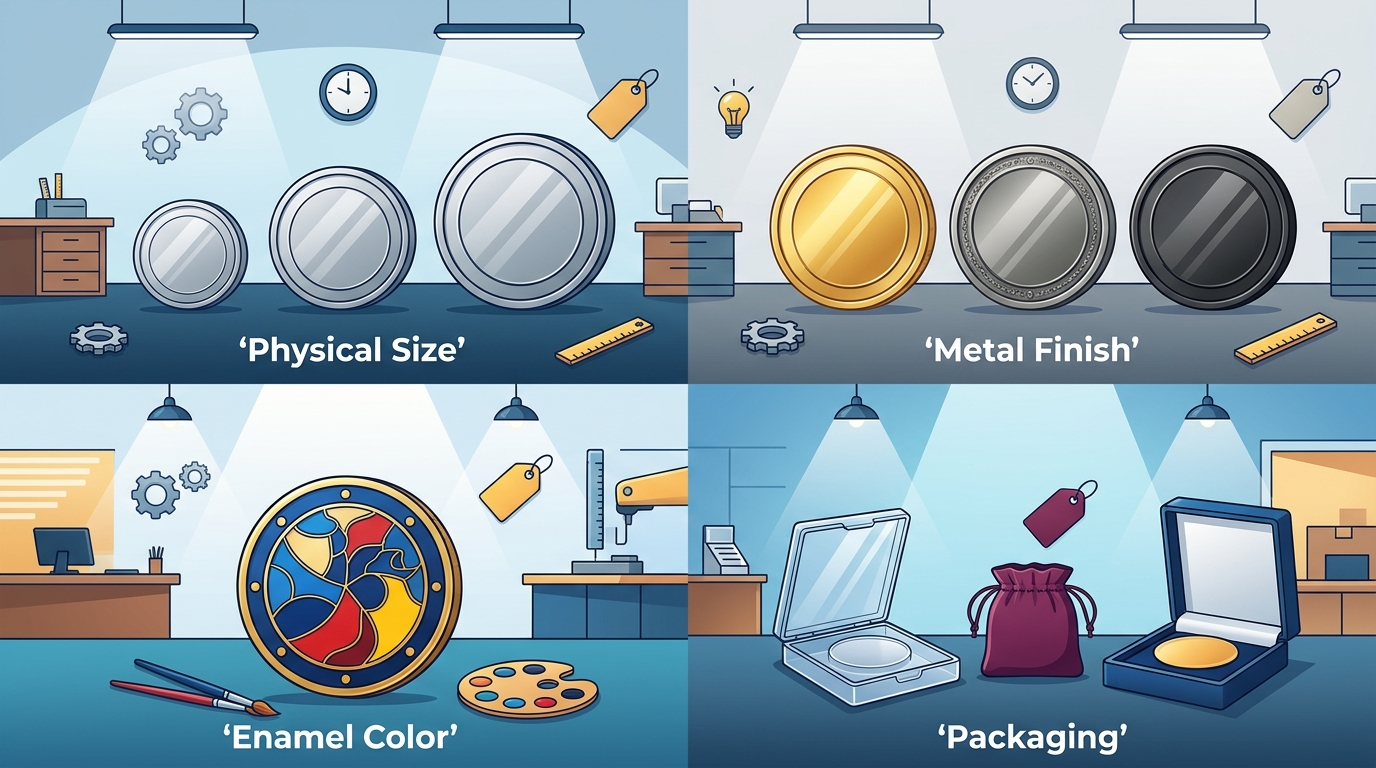
The price of custom recognition coins is determined by four primary variables: physical size, metal finish, enamel color, and packaging. At Custom Challenge Coins, these factors directly influence the per-unit cost. Understanding how each element impacts your budget allows you to allocate funds effectively. This guide breaks down the specific cost drivers so you can plan your recognition program with precision.
Physical Dimensions and Metal Base
Coin size is the most significant driver of material cost. Larger coins require more metal, which increases the base price per unit. A standard 2-inch coin is a common choice for pocket carry, while 3-inch coins offer more space for detailed artwork. The metal base also matters. Standard zinc alloy is the most affordable option for most organizations. However, if you require a heavier feel or a specific weight, premium metals like brass or copper will increase the cost. The die fee is another critical component. This is a one-time setup charge for creating the metal stamp. At Custom Challenge Coins, the die fee varies by size and complexity. Ordering in higher quantities often waives this fee entirely, making the per-coin price drop significantly.
Finish and Surface Texture
The finish of your coin determines its visual appeal and durability. A standard polish finish is the most economical option. It provides a bright, reflective surface that highlights the design. Antique finishes, such as antique gold or antique silver, involve a chemical process that adds depth and a vintage look. This process costs more than a standard polish. The edge treatment also affects pricing. A flat edge is standard and free. However, if you want a rope edge, spur edge, or oblique edge, there is an additional per-coin charge. These details add a tactile quality that recipients often appreciate. They signal that the coin is a premium item rather than a simple giveaway. Choosing the right finish balances aesthetic goals with budget constraints.
Enamel Color and Design Complexity
Enamel is the colored material applied to the coin. The number of colors in your design directly impacts the price. A monochrome design with no color is the cheapest. Adding one color increases the cost. Adding multiple colors increases it further. Soft enamel is the standard and most affordable option. It allows the metal lines to show through the color. Hard enamel is a premium option. It is polished to be flush with the metal surface. This creates a glass-like finish that is more durable and visually striking. Hard enamel costs significantly more than soft enamel. The complexity of the design also matters. Intricate details require more time to apply the enamel correctly. If your design has very fine lines, the production process takes longer, which can affect the final price. Keep your color palette simple to manage costs.
Packaging and Presentation Options
How you present the coin affects the total cost. A standard PVC envelope is often free or very low cost. It protects the coin during shipping and storage. If you want a more premium feel, you can choose other packaging options. Coin capsules are clear plastic holders that protect the coin from scratches. They cost a small amount per unit. Velvet bags and acrylic cases are more expensive. They are ideal for formal presentations or high-value awards. The choice of packaging should match the occasion. A casual team lunch might use a simple envelope. A formal retirement ceremony might warrant a velvet case. At Custom Challenge Coins, you can select the presentation style that fits your event. This ensures the coin feels as special as the recognition it represents.
Quantity and Production Volume
Ordering more coins lowers the cost per unit. This is a fundamental principle of manufacturing. The setup costs are spread across a larger number of items. For example, a 50-coin order has a higher per-unit price than a 500-coin order. The die fee is often waived for orders over 300 units. This makes bulk orders much more cost-effective. If you are planning a long-term recognition program, consider ordering in larger batches. You can store the coins and distribute them over time. This approach saves money and ensures consistency. It also allows you to take advantage of volume discounts. Planning your quantity carefully is one of the easiest ways to reduce your overall spend.
Key Takeaways
- Coin size is the primary driver of material cost. Larger coins cost more per unit.
- The die fee is a one-time setup charge. It is often waived for orders over 300 units.
- Soft enamel is the most affordable color option. Hard enamel is a premium upgrade.
- Edge treatments like rope or spur edges add a small per-coin cost.
- Packaging options range from free PVC envelopes to premium velvet cases.
- Ordering in higher quantities significantly lowers the per-unit price.
- Complex designs with many colors increase production time and cost.
Frequently Asked Questions
What is the minimum order quantity for custom coins?
The minimum order quantity is typically 50 coins. This allows for efficient production and reasonable pricing. Ordering fewer than 50 is possible but may incur higher per-unit costs.
How long does it take to receive custom coins?
Standard production and delivery takes about 10 to 14 business days. Rush options may be available for an additional fee. Complex designs with hard enamel may take longer.
Can I use my own logo on the coin?
Yes, you can use your own logo. You must own the rights to the logo or have permission to use it. We will not reproduce copyrighted material without written permission.
What is the difference between soft and hard enamel?
Soft enamel is recessed below the metal surface. Hard enamel is polished flush with the metal. Hard enamel is more durable and has a glass-like finish.
Do you offer a warranty on custom coins?
Yes, we offer a warranty against manufacturing defects. If a coin is defective, we will remake or replace it within 30 days of delivery.
Can I order a single coin?
Yes, you can order a single coin. However, it is more cost-effective to order in bulk. The per-unit price is lower for larger orders.
Start Your Coin Project
Understanding these cost factors helps you create a recognition program that fits your budget. At Custom Challenge Coins, we help you navigate these choices. Our team provides free design proofs and clear pricing. Contact us today to start your custom coin project.