
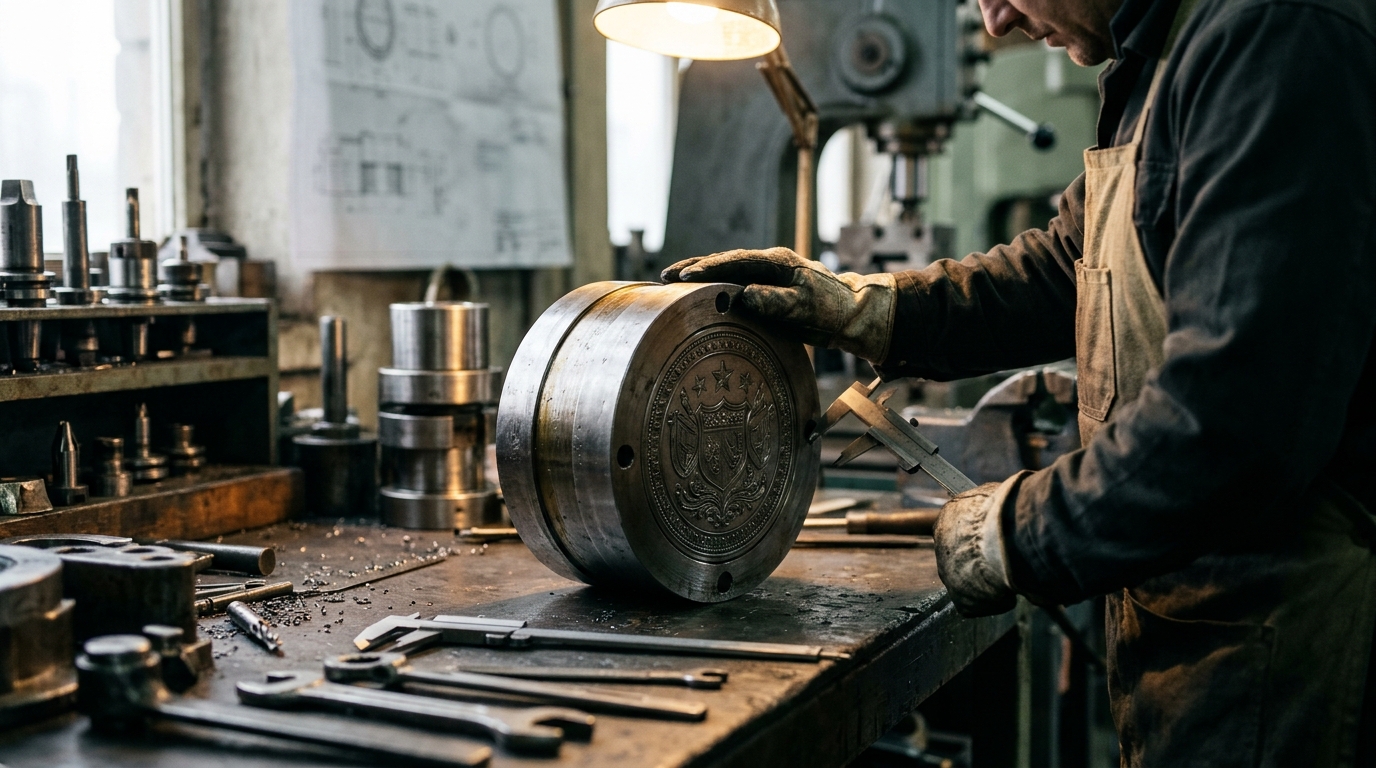
A mold die setup fee is a one-time charge for creating the metal tooling required to strike your custom design. For corporate recognition orders, this fee is generally worth paying because it ensures high-definition detail and allows for future reorders without additional tooling costs. At Custom Challenge Coins, we help organizations understand this investment to maximize the value of their employee recognition programs.
Defining the Mold Die Setup Fee
Mold die setup fee is the cost associated with engineering and manufacturing the specific metal dies used to press your design into blank coins. This process involves creating a positive and negative die pair that work together to transfer your artwork onto the metal surface. Without these custom tools, a manufacturer cannot produce a coin with your specific logo, text, or imagery.
The fee covers the labor of a die maker who carves or machines the steel to match your design specifications. It also includes the material cost of the high-grade steel used for the dies. Because dies are durable and can strike thousands of coins, the fee is amortized over the life of the tooling rather than just the first order.
Why Manufacturers Charge for Tooling
Manufacturers charge this fee because the creation of a die is a specialized, time-intensive process that requires precision engineering. Unlike standard mass-produced items, custom coins require unique tooling for every single design. The steel used for dies is expensive, and the machining process requires skilled technicians to ensure the depth and clarity of the design are perfect.
This cost is distinct from the per-unit price of the coins themselves. The per-unit price covers the metal blank, plating, and labor for striking the coin. The setup fee covers the creation of the machine that strikes the coin. Understanding this separation helps corporate buyers budget accurately for their recognition programs.
Value for Corporate Recognition Orders
For corporate recognition orders, the die setup fee is often a strategic investment rather than a sunk cost. Companies frequently order coins for annual awards, quarterly milestones, or specific project completions. If you pay for the die setup once, you can reorder the same design in the future without paying the setup fee again. This significantly lowers the cost per unit for subsequent orders.
Consider a company that orders 100 coins for an annual gala. The setup fee might be a significant portion of the initial budget. However, if the company orders another 100 coins the following year, the absence of a setup fee makes the second order much more affordable. This long-term savings is a key factor in determining whether the fee is worth paying.
How Pricing Structures Affect the Fee
The amount of the die setup fee often depends on the quantity of coins ordered in the initial run. Many manufacturers offer tiered pricing where the setup fee decreases or is waived as the order quantity increases. For example, a small order of 50 coins might incur a higher setup fee, while an order of 300 or more coins might have a reduced or no setup fee.
This structure encourages buyers to order in larger quantities to take advantage of the lower per-unit costs and reduced tooling charges. It is important to review the specific pricing tiers to understand how the setup fee applies to your planned order size. Some manufacturers may offer a flat fee regardless of quantity, while others adjust the fee based on volume.
Impact of Design Complexity on Costs
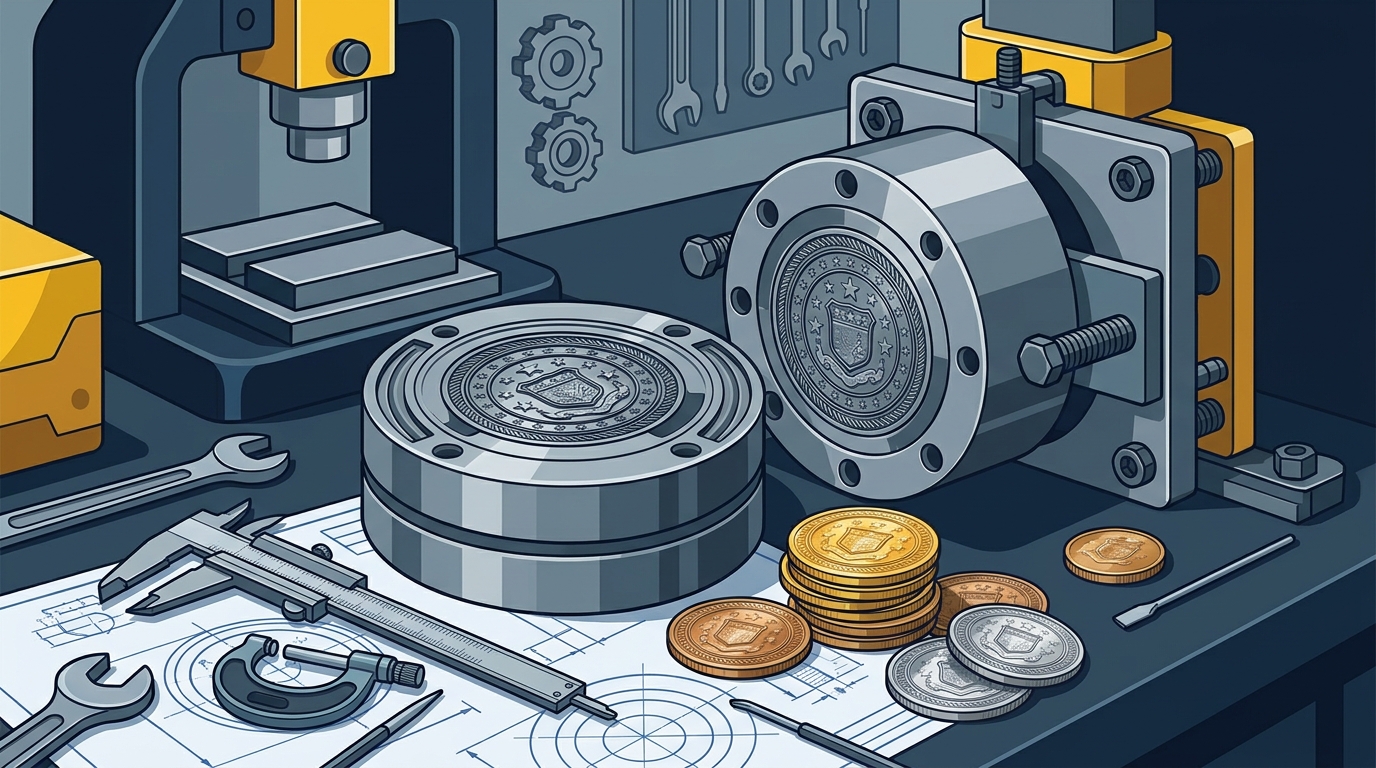
The complexity of your design can also influence the die setup fee. Simple designs with minimal detail may require less time to machine, potentially resulting in a lower fee. More complex designs, such as those with 3D elements, fine text, or intricate logos, may require more time and precision, which can increase the setup cost. It is essential to discuss your design requirements with the manufacturer to get an accurate quote for the tooling.
At Custom Challenge Coins, we work with clients to optimize their designs for both visual impact and cost efficiency. By understanding how design elements affect the die-making process, you can make informed decisions that balance quality with budget constraints. This collaboration ensures that your final product meets your expectations without unexpected costs.
Key Takeaways
- A mold die setup fee is a one-time charge for creating the custom metal tooling needed to strike your coin design.
- This fee covers the engineering, labor, and material costs of manufacturing the dies.
- For corporate orders, the fee is often worth paying because it allows for future reorders without additional tooling costs.
- Setup fees may vary based on order quantity, with larger orders often receiving reduced or waived fees.
- Design complexity can impact the setup fee, with more intricate designs potentially costing more to machine.
- Understanding the separation between setup fees and per-unit costs helps in accurate budgeting for recognition programs.
Frequently Asked Questions
Is the die setup fee refundable?
No, the die setup fee is generally non-refundable because the dies are custom-made for your specific design and cannot be resold or reused for other clients. However, the dies are retained by the manufacturer for future reorders.
Can I reuse the dies for a different design?
No, each die is specific to one design. If you want a new design, a new set of dies must be created, which will incur a new setup fee. The old dies can only be used to reproduce the original design.
How long do the dies last?
High-quality steel dies can last for thousands of strikes. They are durable and can be used for multiple years, making them a long-term asset for companies with ongoing recognition programs.
Does the setup fee include the cost of the first coin?
No, the setup fee is separate from the cost of the coins. You will pay the setup fee plus the per-unit price for each coin in your order. The setup fee covers the tooling, while the per-unit price covers the metal and labor for the coins.
Can I see a sample before paying the setup fee?
Yes, most manufacturers provide a digital proof of your design before you commit to the order. This allows you to review the design for accuracy. However, the physical die is created after you approve the proof and place the order.
What happens if I need to change the design after the dies are made?
If you need to change the design after the dies are made, you will need to pay for a new set of dies. The original dies cannot be modified to create a new design. It is important to finalize your design before approving the order to avoid additional costs.
Conclusion
Understanding the mold die setup fee is essential for planning a successful corporate recognition program. This one-time investment ensures high-quality, detailed coins and provides the flexibility to reorder in the future. By working with a reputable manufacturer like Custom Challenge Coins, you can navigate the pricing structure and make informed decisions that maximize the value of your employee recognition efforts. To start your project, submit a quote request today. Learn more: Contact Custom Challenge Coins.