
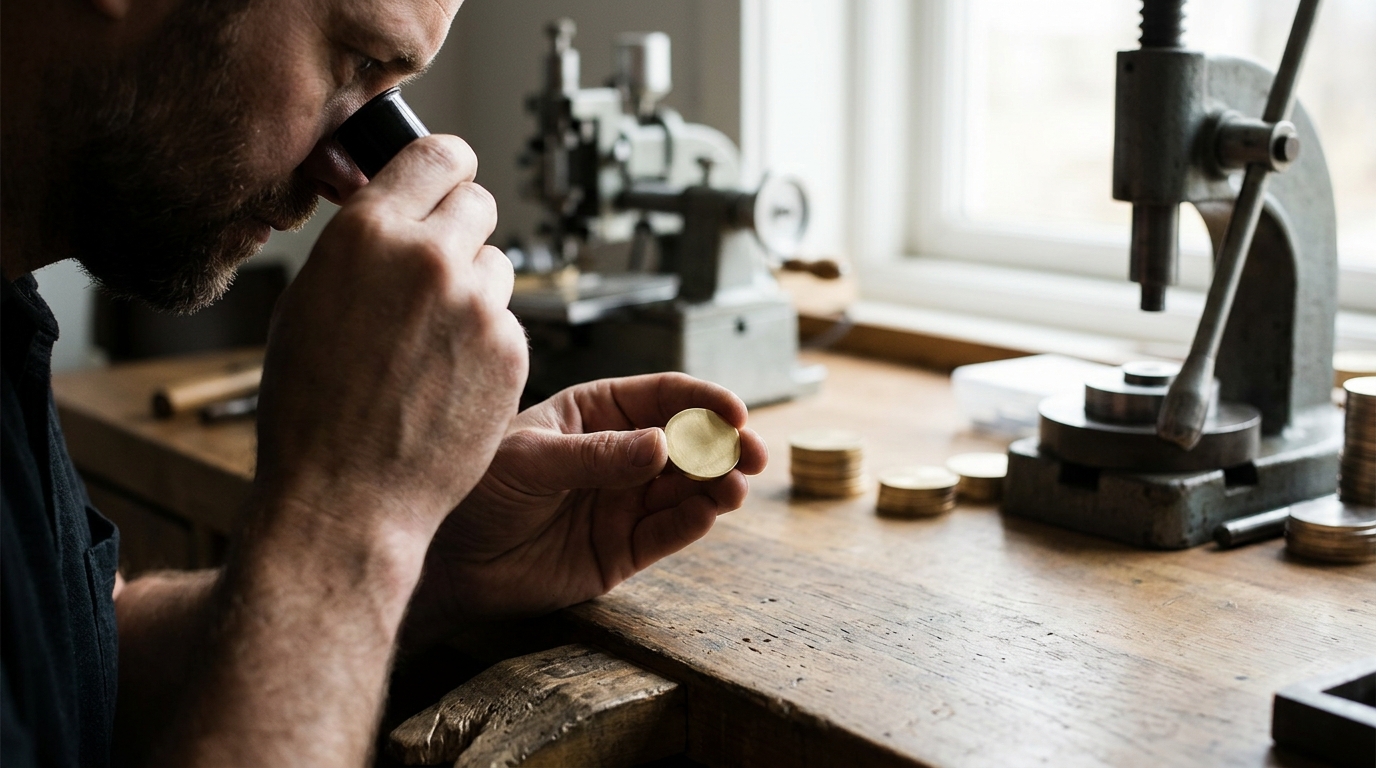
Most challenge coin manufacturers require a minimum order of 50 to 100 units to cover die creation costs. Some vendors allow single-unit orders for existing designs, but custom minting typically starts at 50 pieces. At Custom Challenge Coins, we structure our pricing to make small batches accessible while ensuring high-quality production standards for every client.
The Economics of Die Creation
Understanding minimum order quantities (MOQs) requires looking at the physical tools used in minting. A coin die is a specialized metal stamp used to press designs into blank metal discs. Creating a new die involves significant labor and material costs that are independent of the number of coins produced. Because the die is a one-time expense, manufacturers spread this cost across the total order volume. This is why the per-unit price drops significantly as the quantity increases.
Die Fee Waivers
Many manufacturers offer die fee waivers when orders reach a certain threshold. At Custom Challenge Coins, for example, orders of 300 units or more typically qualify for a no-die-fee promotion. This incentive encourages clients to plan ahead and order in bulk, which benefits both the customer and the production schedule. Understanding these thresholds helps buyers budget more accurately for their recognition programs.
Standard Industry Minimums
While policies vary by vendor, the industry standard for custom challenge coins generally falls between 50 and 100 units. This range allows manufacturers to recoup the initial setup costs while keeping the per-unit price competitive. Some specialized mints may require higher minimums, such as 250 or 500 units, particularly for complex 3D designs or specialty finishes. These higher minimums reflect the increased time and skill required to produce intricate details.
Single-unit orders are possible but rare for custom designs. If a manufacturer has already created a die for a specific design, they may sell a single coin from that existing stock. However, creating a brand-new die for a single coin is economically unfeasible for most businesses. Therefore, if you need a unique design for just one person, you should expect to pay a premium that covers the full cost of the die plus the coin itself.
Volume Discounts
Volume discounts are the direct result of spreading fixed costs over more units. A 50-coin order might cost $5.27 per unit, while a 1,000-coin order of the same design might cost $2.61 per unit. This nearly 50% reduction in per-unit cost makes bulk ordering the most cost-effective strategy for organizations planning multiple award ceremonies or ongoing recognition programs. Buyers should always request a tiered quote to see how pricing changes at different quantity breakpoints.
Impact of Design Complexity on Minimums
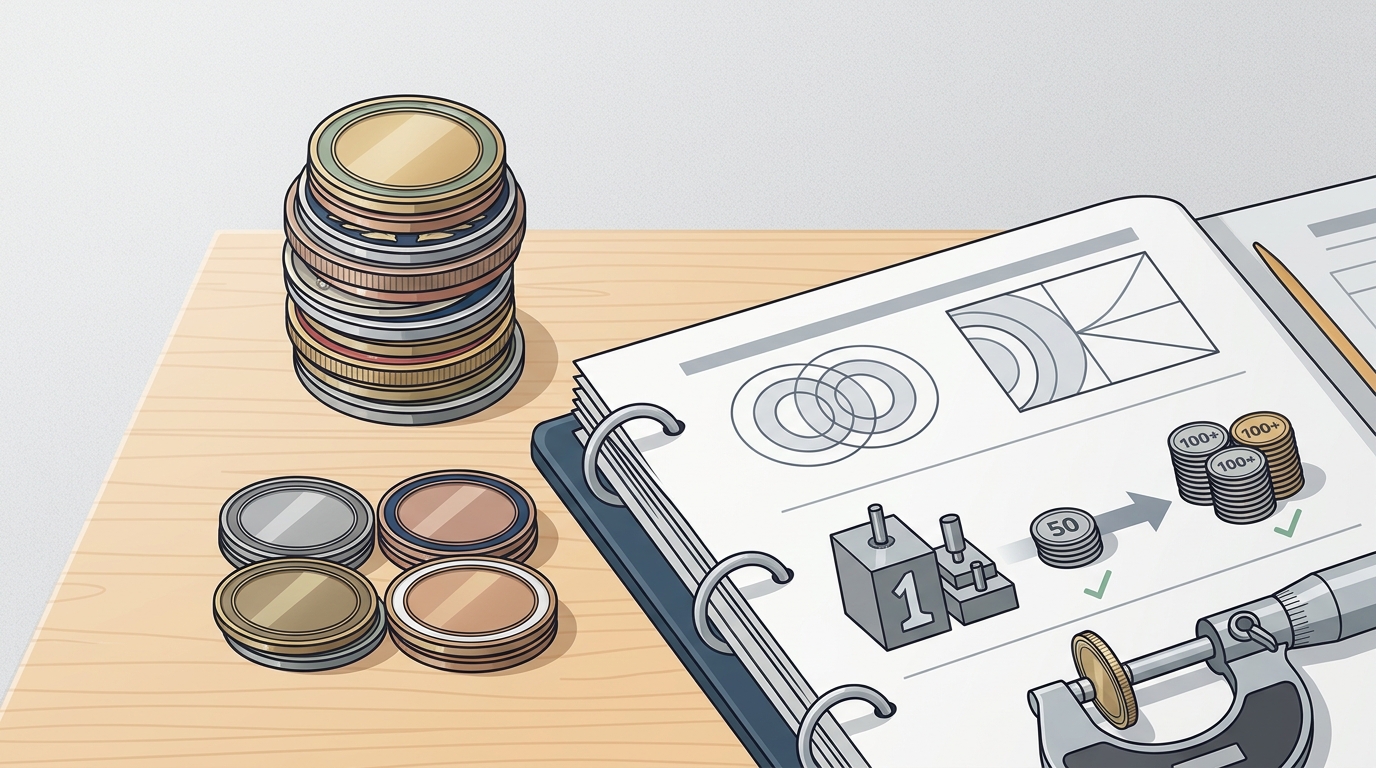
Design complexity can influence the minimum order quantity required by a manufacturer. Simple 2D designs with flat surfaces are faster to produce and may have lower MOQs. In contrast, 3D designs with raised relief, hard enamel, or custom shapes require more time and precision. These complex coins often have higher production costs per unit, which can lead manufacturers to set higher minimums to ensure profitability.
For instance, a coin with a custom cut-out shape or a spinner center requires additional tooling and quality control steps. These processes are more labor-intensive and carry a higher risk of defects. As a result, some vendors may require a minimum of 100 or more units for such designs. At Custom Challenge Coins, we handle complex shapes and 3D reliefs with the same standard minimums, but we advise clients to review their design files carefully to ensure they align with production capabilities.
Enamel and Finishes
The choice of finish also plays a role in production time and cost. Soft enamel is the most common and affordable option, allowing for up to seven colors per side at no extra charge in many cases. Hard enamel, which provides a smooth, glass-like surface, is more expensive and time-consuming to apply. If a client chooses hard enamel, they should expect a higher per-unit price, which may influence the optimal order quantity. Balancing aesthetic goals with budget constraints is key to selecting the right quantity.
Strategies for Optimizing Order Size
Organizations can optimize their order size by planning their recognition programs in advance. Instead of ordering coins for a single event, consider the needs of the entire year. If a military unit or corporate team plans to hold quarterly award ceremonies, ordering a bulk quantity of 500 or 1,000 coins at once can significantly reduce costs. This strategy also ensures a consistent supply of coins, avoiding the need for rushed, smaller orders later in the year.
Another strategy is to split shipments. Some manufacturers allow clients to order a large quantity but have the coins shipped in smaller batches over time. This approach provides the volume discount of a large order while managing inventory and cash flow. At Custom Challenge Coins, we can accommodate split-ship requests for bulk orders, providing flexibility for clients with specific delivery schedules.
Budgeting for Bulk Orders
When budgeting for a bulk order, include the cost of packaging and presentation. Coins are often presented in PVC envelopes, coin capsules, or velvet bags. These packaging options add to the total cost but enhance the perceived value of the award. For example, a velvet case might cost $4.00 each, while a PVC envelope is free. Including these costs in your budget ensures that the total investment aligns with your financial plan. Requesting a detailed quote that breaks down coin, die, and packaging costs is the best way to avoid surprises.
Comparing Vendor Requirements
Different vendors have different policies regarding minimum order quantities and die fees. Some manufacturers charge a flat die fee regardless of quantity, while others waive the fee at certain thresholds. It is essential to compare these policies when selecting a provider. A vendor with a lower per-unit price but a high die fee may end up costing more for small orders than a vendor with a slightly higher per-unit price but a waived die fee.
At Custom Challenge Coins, we provide transparent pricing that clearly outlines die fees and per-unit costs for various quantities. This transparency allows clients to make informed decisions based on their specific needs. We also offer free design services and unlimited revisions, ensuring that the final product meets your expectations before production begins. This level of service is a key differentiator in the challenge coin industry.
Customer Support and Communication
Effective communication with your vendor is crucial for a successful order. A responsive support team can help you navigate the ordering process, answer questions about design files, and provide accurate delivery estimates. At Custom Challenge Coins, our team is available Monday through Friday to assist with any questions or concerns. This level of support ensures that clients feel confident throughout the ordering process, from initial inquiry to final delivery.
Key Takeaways
- Standard minimum order quantities for custom challenge coins are typically 50 to 100 units.
- Ordering in bulk, such as 300 or 500 units, often qualifies for die fee waivers and lower per-unit prices.
- Design complexity, such as 3D reliefs or custom shapes, can influence production costs and minimums.
- Planning annual recognition programs in advance allows for bulk ordering and significant cost savings.
- Transparent pricing and responsive customer support are essential when selecting a challenge coin manufacturer.
Frequently Asked Questions
Can I order just one custom challenge coin?
You can order a single coin, but it will be more expensive because you must cover the full cost of the die. It is more cost-effective to order at least 50 units to spread the die fee across more coins.
What is the typical minimum order quantity for most manufacturers?
Most manufacturers require a minimum of 50 to 100 units for custom designs. Some may have higher minimums for complex designs or specialty finishes.
How do die fees affect the total cost of my order?
Die fees are a one-time cost that is added to the total order price. The per-unit price decreases as the order quantity increases because the die fee is spread over more coins.
Can I get a die fee waiver for a large order?
Yes, many manufacturers offer die fee waivers for orders above a certain threshold, such as 300 or 500 units. Check the specific vendor's pricing page for details.
Does design complexity change the minimum order quantity?
Complex designs with 3D reliefs or custom shapes may have higher production costs, which can lead to higher minimum order quantities or per-unit prices.
How long does it take to produce a bulk order?
Production time varies by vendor and design complexity. Simple designs may take 10-14 business days, while complex designs with hard enamel may take longer.
Start Your Order Today
Understanding minimum order quantities is the first step in creating a cost-effective and impactful recognition program. By planning ahead and choosing a vendor with transparent pricing, you can maximize the value of your investment. At Custom Challenge Coins, we are committed to helping you find the right balance between quality, cost, and quantity. Contact our team today to discuss your project and receive a free quote.