
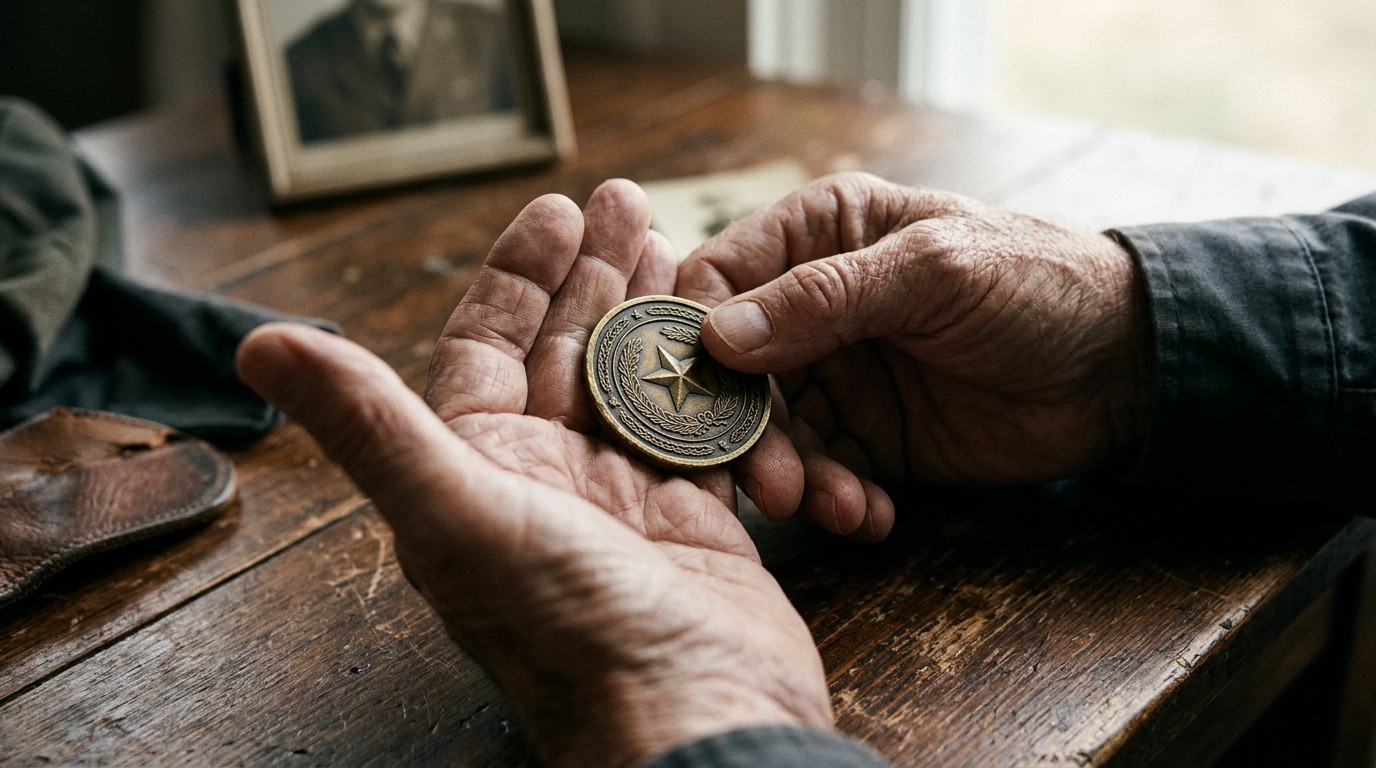
Die struck challenge coins are exceptionally durable, often lasting decades without significant loss of detail. Unlike cast coins, the high-pressure minting process creates sharp, raised edges that resist wear. For most users, a die struck coin will outlast the person holding it, maintaining its crisp appearance through years of daily pocket carry.
The Physics of Die Struck Durability
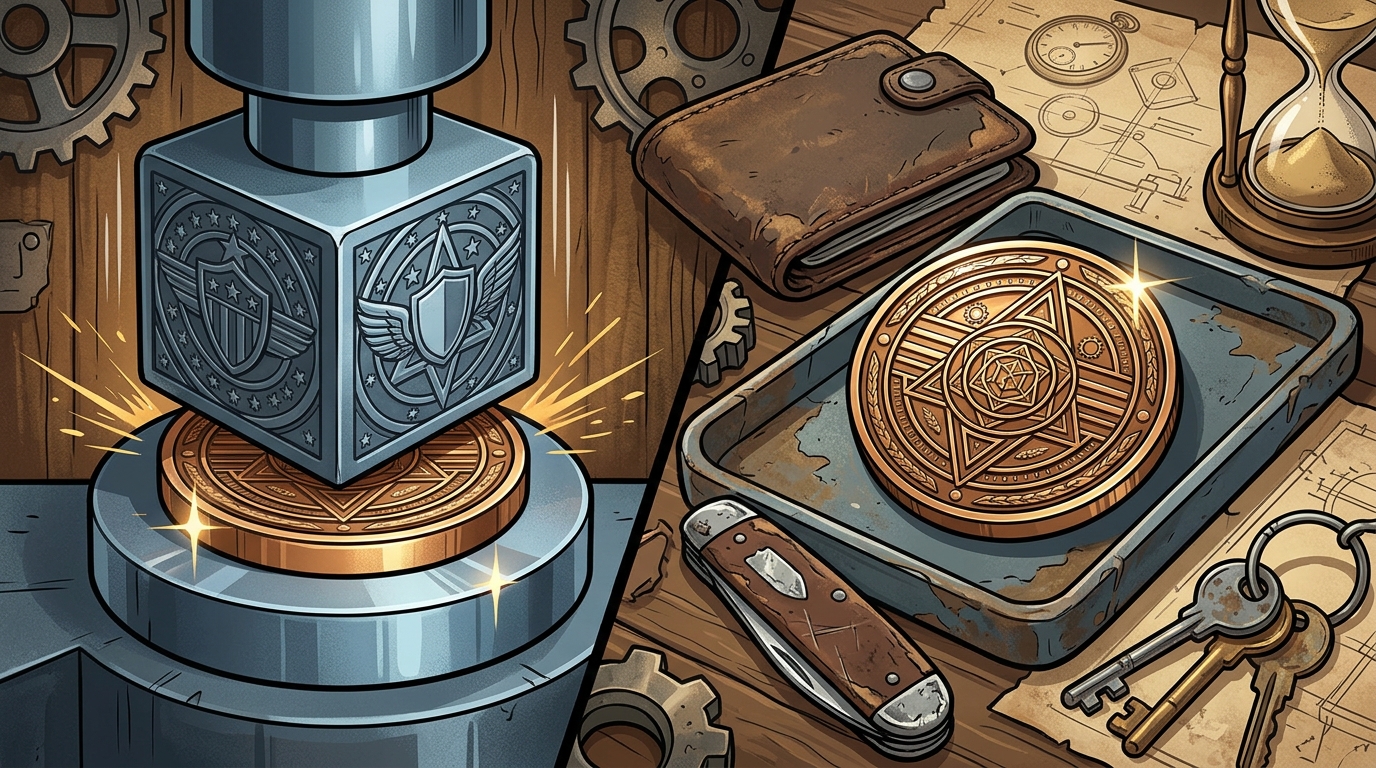
Die struck coin is a metal blank compressed between two hardened steel dies under extreme pressure. This process, known as coining, forces the metal to flow into the die cavities, creating a coin with sharp, defined edges. The resulting structure is dense and uniform, which is the primary reason these coins resist wear so well. When a coin is cast, the metal is poured into a mold, which can result in softer edges and a less dense structure.
The density of the metal is critical. In a die struck coin, the metal is compressed, eliminating air pockets and creating a solid, robust piece. This density means that the raised elements of the design are less likely to chip or crack under impact. For a military unit or first responder who carries a coin in a pocket or on a keychain, this structural integrity is the difference between a coin that looks new after ten years and one that looks worn after two.
At Custom Challenge Coins, we utilize high-pressure die striking to ensure that every coin we produce meets this standard of durability. The process is not just about aesthetics; it is about engineering a product that can withstand the rigors of daily use in demanding environments.
How Wear Actually Occurs
Wear on a challenge coin is primarily a function of friction and impact. When a coin rubs against other objects in a pocket, such as keys, wallets, or other coins, the high points of the design are the first to experience abrasion. Over time, this friction smooths out the sharpest edges. However, because die struck coins have a dense metal structure, this smoothing process is slow. It often takes years of constant friction to noticeably alter the profile of a high-quality die struck coin.
Impact is the other major factor. Dropping a coin on a hard surface can cause minor dents or chips. Cast coins are more susceptible to chipping because their edges are less defined and the metal is less dense. Die struck coins, with their sharp, compressed edges, are far more resistant to this type of damage. A coin that has been dropped dozens of times will likely show no visible damage if it was die struck.
Understanding these mechanics helps set realistic expectations. A coin that is kept in a display case will last indefinitely. A coin that is carried daily will show some wear, but the core design elements will remain intact for a very long time. The key is to understand that wear is a gradual process, not a sudden failure.
Material and Finish Considerations
The base metal of the coin plays a significant role in its longevity. Brass and bronze are common materials for challenge coins. These metals are soft enough to be die struck but hard enough to resist wear. The finish of the coin also matters. A polished finish is more susceptible to showing scratches than an antique or matte finish. If you want a coin that hides wear well, an antique finish is a practical choice. It provides a textured surface that masks minor scratches and scuffs.
Enamel is another factor to consider. Hard enamel is fired at high temperatures, making it extremely durable and resistant to chipping. Soft enamel, on the other hand, is more flexible but can wear down over time. For a coin that needs to last, hard enamel is the superior choice. It bonds with the metal and creates a surface that is as hard as the metal itself. This combination of die struck metal and hard enamel creates a coin that is virtually indestructible under normal use.
When selecting a coin for long-term use, consider the environment in which it will be used. A coin for a desk display has different needs than a coin for a tactical vest. At Custom Challenge Coins, we can advise you on the best material and finish combination for your specific use case. Our team has experience with a wide range of applications, from military units to corporate events, and we can help you choose a coin that will last.
Maintenance and Care
While die struck coins are durable, a little care can extend their life even further. The simplest form of maintenance is to keep the coin clean. Dirt and grit can act as abrasives, accelerating wear. Wiping the coin with a soft cloth after use can remove these particles and prevent them from scratching the surface. For coins with enamel, a gentle cleaning with mild soap and water is sufficient. Avoid using harsh chemicals or abrasive cleaners, as these can damage the finish.
Storage is also important. If you are not wearing the coin, store it in a soft pouch or a display case. This prevents it from rubbing against other objects and reduces the risk of impact damage. For collectors, a coin capsule is a good option. It protects the coin from air and moisture, which can cause tarnishing over time. Tarnishing is a cosmetic issue, not a structural one, but it can affect the appearance of the coin. Regular polishing can remove tarnish and restore the coin's original luster.
By following these simple care practices, you can ensure that your die struck challenge coin remains in excellent condition for decades. The investment in a high-quality coin is a long-term one, and a little maintenance goes a long way in preserving its value and appearance.
Longevity in Real World Scenarios
Real world scenarios provide the best evidence for the longevity of die struck coins. Military units often carry coins for years, sometimes decades. These coins are exposed to the elements, dropped, and rubbed against gear. Yet, many of these coins still look nearly new. This is a testament to the durability of the die struck process. The coins have survived the rigors of active duty, which is a far more demanding environment than most civilian uses.
First responders, such as police and fire departments, also use challenge coins in demanding environments. These coins are often carried in pockets or on keychains, where they are subject to constant friction and impact. Again, the die struck process proves its worth. The coins maintain their detail and structural integrity, even after years of heavy use. This real world performance is why die struck coins are the preferred choice for organizations that need a durable, long-lasting token of recognition.
For private organizations and businesses, the longevity of a coin is also a factor. A coin given to an employee or a client is a symbol of the organization. If the coin wears out quickly, it can reflect poorly on the organization. A die struck coin, with its long lifespan, serves as a lasting reminder of the relationship. It is a tangible asset that retains its value and appearance over time.
Key Takeaways
- Die struck coins are denser and more durable than cast coins, resisting wear and impact far better.
- The high-pressure minting process creates sharp, defined edges that are less likely to chip or crack.
- Hard enamel is the most durable finish, bonding with the metal to create a scratch-resistant surface.
- Antique and matte finishes hide minor scratches and scuffs better than polished finishes.
- Regular cleaning and proper storage can extend the life of a coin and preserve its appearance.
- Real world use by military and first responder units demonstrates the long-term durability of die struck coins.
- Choosing the right material and finish combination is key to ensuring a coin lasts for decades.
Frequently Asked Questions
How long does a die struck coin last?
A die struck coin can last for decades, often outlasting the person who owns it. The dense metal structure and sharp edges resist wear and impact, ensuring that the coin maintains its detail and appearance over a long period of time.
What causes a challenge coin to wear down?
Wear is primarily caused by friction and impact. When a coin rubs against other objects, the high points of the design are abraded. Dropping the coin on a hard surface can also cause dents or chips. Die struck coins are more resistant to these types of damage than cast coins.
Is hard enamel more durable than soft enamel?
Yes, hard enamel is more durable than soft enamel. It is fired at high temperatures, creating a surface that is as hard as the metal itself. This makes it resistant to chipping and scratching. Soft enamel is more flexible but can wear down over time.
How can I care for my challenge coin?
Keep the coin clean by wiping it with a soft cloth after use. Store it in a soft pouch or display case when not in use. Avoid using harsh chemicals or abrasive cleaners. Regular polishing can remove tarnish and restore the coin's luster.
Do die struck coins tarnish?
Yes, die struck coins can tarnish over time, especially if they are made of silver or copper. Tarnishing is a cosmetic issue and can be removed with regular polishing. It does not affect the structural integrity of the coin.
Can I get a die struck coin with a custom shape?
Yes, die struck coins can be made in custom shapes. The die striking process allows for complex shapes and detailed designs. At Custom Challenge Coins, we can create a coin in the shape of your logo or any other design you have in mind.
Conclusion
Die struck challenge coins are the gold standard for durability. Their dense metal structure and sharp edges ensure that they can withstand years of daily use without significant loss of detail. For organizations that need a long-lasting token of recognition, a die struck coin is the ideal choice. At Custom Challenge Coins, we are committed to producing coins that meet this standard of quality and durability. Whether you are a military unit, a first responder, or a private organization, we can help you create a coin that will last for decades. To start your project, contact our team.